Showing posts with label BREWniversity. Show all posts

Thursday, June 19, 2014

Stout Glass


What's in a glass? Hopefully some good beer, but does it matter if you use the proper glass for your chosen beer style? In short, yes, but now there's a been a few beer specific (Rastal teku) and beer style specific glasses (e.g. Sierra Nevada x Dogfish Head Spiegelau IPA glass) popping up recently, the newest being the Left Hand x Rogue Spiegelau stout glass. So do you need this glass for your stouts? Maybe. 
Methods
I purposely picked 2 beers that were different in a few aspects to compare the stout specific glass against their normal proper glassware: 

Short's Empress Catherine-  Russian imperial stout, 8.0% ABV, new to me, and proper glassware is a snifter (I used an oversized snifter)


Modern Times Black House- Coffee stout, 5.8% ABV, a proven favorite of mine, and proper glassware is a pint glass (I used a willi becher glass)

Results
Appearance 
In both cases the stout glass provided a bigger more constant head at the initial pour and throughout the comparison, but only slightly. 
Edge: Stout glass (slightly)
Aroma
The oversized snifter performed just as well as the stout glass, but Black House had stronger coffee aromas in the stout glass versus the willi becher. This really isn't a surprise as both the snifter and stout glass have designs that funnel aromas to the nose. 
Edge: Stout glass (only over the willi becher)

Taste
No difference at all. 
Edge: None


Mouthfeel
With both beers the stout glass helped provide a smoother creamier mouthfeel. The lip between the "stem" and bowl helps agitate the beer, creating this mouthfeel trick. Overall this seemed to benefit the regular stout more. 
Edge: Stout glass

Conclusion
The stout glass clearly provides a better mouthfeel and head, both of which are important aspects of enjoying a stout. The rest is a mixed bag; the beer won't taste better and it might smell better, but whether or not you should buy this glass will depend on a few things:
Black House
  • Drink a lot of stouts? Yes? Maybe buy; No? Don't buy
  • All you have is pint glasses: Buy
  • You have a snifter and mostly drink imperial stouts: Don't buy; your snifter will work well enough. 
  • You mostly drink non-imperial stouts: I'd lean towards buy; this is where I think this glass will shine as it should help bump up the mouthfeel of a regular stout. 

It should be noted that this glass comes in 3 flavors: Blank, Rogue Brewing branded, and Left Hand Brewing branded. I opted for the blank version, which much to my great annoyance, does not have etching on the bottom like the branded ones do. This etching provides nucleation spots for bubbles to form on, further enhancing head and mouthfeel. "Don't want to advertise a brewery?!? No extra bubbles for you!!" The lack of nucleation spots on mine does not change my opinion; the versions with nucleation will just be better at what I think this glass already does well, but won't help the other aspects. 

In sum, whether or not you buy this glass will depend on your stout preferences and your existing glassware collection. 

Empress Catherine


Thursday, May 29, 2014

BREWniversity Style Guidelines: Maibock

It's May (although just barely), so it felt appropriate that the next style in our BREWniversity series is inspired by the month. Today we're looking at the Maibock, or Helles Bock.

Appearance: The beer should pour out a deep gold or a light amber with good clarity. There should be a creamy white head that persists while you drink.
 
Aroma: Expect a moderately strong malt aroma with some toasty qualities along with a moderately low spicy hop aroma. Overall the aroma should be very clean.

Flavor: The dominant flavor will be from the malts, but with very little carmelization. You may get some toasty notes, or a slight DMS flavor. There should be a moderate noble hop flavor with a possible spicy or peppery quality. There may be a moderately dry finish with both malt and hops.

Mouthfeel: This is a medium bodied beer, with moderate carbonation. It should be smooth and clean.
 
Local Example: Black Acre Goat Race- I had the chance to try Goat Race this past weekend. If you have the chance to hit up Black Acre, this would be a great beer to try. I thought it was refreshing, and really fit the style well.


In order to get a better idea for the style, and not be too biased in my representation, I looked at a few sets of guidelines. Links are below in case you're interested in delving in a bit more.
Cheers!

Wednesday, April 16, 2014

BREWniversity: How to Saber Your Beer

You read the title correctly. The first time I heard someone say that, I thought it was some stupid joke. I had no clue that sabering a beer was a thing. Apparently it is. The concept is actually kind of cool. Opening your corked bottle with a knife in one quick swipe seems like a recipe for disaster. I've seen videos of people opening bottles this way and it never seemed like something I could pull off.

At a tasting two weeks ago, our friend Parker attempted to saber a bottle and was quite unsuccessful. Granted there was a lot of pressure, and people generally seemed uncomfortable with the idea; so after a few failed swipes with a knife he aborted the mission for the night. 

Fast forward to last night. The topic came up in conversation halfway through our evening. We decided to give Parker another chance. I had a Cascade Strawberry that was nicely chilled and ready for action. I gave him a butter knife and we all went outside to the deck. 

Parker took a couple swipes and couldn't  get it done. Rob then took his turn and was also unsuccessful. My turn. My first two swipes were futile. The third one, however, resulted in a nice "pop" sound and the cork went flying into my back yard. We all erupted into cheers as the beer slightly gushed out of the bottle. It is, without a doubt, a cool party trick that was awesome to experience. 

A couple of tips if you choose to try this yourself. 

1. Be outside. You don't want this going down indoors because of various safety reasons. 
2. Use a butter knife. 
3. Find the seam of the bottle, I am told this is the weakest part of the bottle and if you strike in that area you are more likely to experience success. 
4. Be aggressive with your strike. There are a lot of fears that can go through your mind when trying to saber your beer. "Will I shatter the bottle?" "Will I slice my hand or finger?" (Etc.). These thoughts will bring that glimmer of doubt which results in hesitation. 
5. You should slide the knife up the seam and whack the bottom of the cage in one fast motion. Be sure to be holding the bottle tightly and at a 45 degree angle at least, if not higher. This allows a successful strike to send the cork flying. 

The end result is a clean break of the glass holding the cork in one piece. Completely safe to drink.

Here is a pic of the bottle I sabered.

Cheers!!

Thursday, March 13, 2014

BREWniversity: Style Guidelines- Dry Irish Stout

The first style in our BREWniversity series is inspired by Monday's holiday. That's right, it's time for St. Patrick's Day again. No, we're not going to put green food coloring in a Miller Lite and call it a style. We'll get to Miller Lite, but not today. Instead, we're going to take a look at Dry Irish Stouts.

Appearance: Very dark, almost black in color. Thick head, creamy in texture and light tan to brown in color, which will last while drinking the beer. (Think of the mustache you get while drinking a Guinness.)

Aroma: Roasted malt and barley lend a coffee like character to the aroma. You may get a hint of cocoa, but that's not necessary. European hop aroma at very low levels, also ok if not perceived at all.

Flavor: Like the aroma, there will be very low to no European hop flavor. Light caramel flavor is common. The finish will be dry and roasty due to the roasted barley. The bitterness comes more from the roasted character than the hops used.

Mouthfeel: Body should be somewhere between medium-light and medium full- much lighter than the color and head would lead you to believe if you've never had it before. It should be very smooth, with low carbonation.

Examples: Guinness, Murphy's, Sun King Ring of Dingle, Brooklyn Dry Stout

In order to get a better idea for the style, and not be too biased in my representation, I looked at a few sets of guidelines. Links are below in case you're interested in delving in a bit more.
Cheers!

Thursday, March 6, 2014

The Instagram Beer Community

Yesterday, Andrew talked about creating your craft beer network, which is very valuable for a lot of reasons. For example, a good network can you help with:
  • Keeping up-to-date with new releases/breweries/events
  • Meeting people to hang out with
  • Setting up trades
  • General knowledge 
One of the "tools" out there for expanding and leveraging your network is social media. Twitter, Facebook, and Google+ all have have significant craft beer communities whether it's breweries disseminating news, individuals discussing topics, or groups setting up events. One that you may not be thinking about or have altogether ignored is Instagram (for those of you that don't know what Instagram is, it's an online social media network that is based off of sharing photos and videos; you can "like" people's photos, make comments, follow people, and so on). I know a lot of people have stayed away from Instagram because you think "it's for hipsters" or full of people taking self-aggrandizing #selfie photos... and well you're right, but there's actually a very vibrant #craftbeer community on there. To be honest I'm not sure how I figured out that there was a huge craft beer community on Instagram... it just kind of happened.

Instagram's visual platform is perfect for a craft beer community since so much about beer is visual: the beer itself, label artwork, glassware, bars, breweries, etc. It let's people share and discuss all these elements easily. Plus you can see what's hitting the market ("oh look 'x' must've been released since my #@$#!! feed is full of 'x' pics) and get informal opinions on beers. 

I think one of the best things about Instagram is that the community is less intimidating than some of the other beer focused ones like beeradvocate.com. In my experiences people are friendlier and fairer when it comes to trades. 

The biggest thing I've gotten from Instagram? My current Indy beer friends. The majority of the people I hang out with I met through Instagram. 

So you want to be an Instagram beer star? Slow down there tiger. With any network it's going to take some time and effort to build; people are not going to just start liking your photos, following you, or conversing with you when you're new. Getting started on Instagram is a lot like getting started on twitter. The best way to get started is by using #hashtags to search the vast cluttered rabbit hole that is Instagram. Doing this will lead you to people you may want to follow. To get you started there are some pretty standard hashtags that the beer community uses:

#craftbeer
#beergeek (and other variations)
#properglassware
#(insert name of brewery/beer)
#craftbeerporn
#alehaul
#beermail

I would recommend looking at the other media on their profile before "committing" to follow someone as you'll find that your feed (the media that the people you follow post) can quickly get cluttered with things you don't care about... you may have seen their one beer picture in a land of poo (literally). I know some people, like Andrew, have a "minimum beer photo percentage" threshold someone must pass before he'll follow, and I generally have some guidelines as well.

Once you follow someone hopefully they'll follow you back (liking and commenting on their pictures usually helps). The other thing you can do is figure out which of your beer buddies are already on Instagram. Chances are they take photos of beer and follow other like-minded folk, so you look at who they follow and do the same; If they're really nice they'll give you a shout out. I picked up over a 100 followers one day because an individual with a ton of followers reposted a picture of mine. Just be patient. It took me a really long time to get people following me.

As with any community there's some bad things. It's pretty common that when posting a rare beer picture you'll get slammed with trade requests. If you're all about trading then it's not an issue, but unsolicited requests can get tiresome. Also, the beer giveaway (aka trying to get followers) meme is driving me nuts at the moment.

Take your time, see what's out there, and figure out what works best for you. As with everything craft beer related, it's about having fun and finding people to share the experience. You can look for us on Instagram while you're there:

Russ- therussb
Andrew- TheEmptyCan
Brie- brie3981
El Duque- lukelofland
Kevin- beerdaddyblog
Owen- theillumin8tor
Steve- profbeer

Wednesday, March 5, 2014

Creating Your Craft Beer Network

We've all been told that in your professional life networking is everything. As a sales guy, my whole world revolves around knowing the right people and making as many friends as possible. It's obvious in business. Not as obvious when it comes to beer. We all have friends locally that we drink with, and probably have some college or high school friends that we see a couple times a year when we travel, but a lot of new guys to the scene haven't started creating beer contacts.

Particularly when you are getting into craft beer, there is good reason to invest the time into building a craft beer network. Like in business, make sure you're using the right tools to help strengthen your network.

First, talk to people you know. If your best friend from college is in St. Louis, make sure he knows you love beer. If you're interested in breweries in his area tell him. That way if you go out to hang, he will be more understanding when you drag him to Schlafly (or whatever brewery is in the area). Also, if a beer you're interested in drops make sure he knows it's coming. It may shock you but a lot of your friends are willing to pick up a beer and hold on to it for you. Consider it held ransom for fun.

Second, use technology. I recently got back from a really cool symposium about craft beer writing in Lexington, Kentucky. Since I knew I was heading that way, I went out to twitter and instagram to ask for hot spots to check out. This is a tactic I take almost every time I travel. No one knows the best spots better than locals, and as you develop a social network you will be surprised at how many people have already traveled wherever you're going, and most craft beer geeks are willing to tell you where to go and some may even meet you there for a pint. I learned about some good breweries to check out, great bars to hit up, ands a few totally unique liquor stores that helped make my trip awesome. Beer Advocate and Rate Beer also have forums that do a great job of connecting people. Another resource is seekabrew.com, where you can research distribution footprints to find what breweries are available in the state you are visiting that you might not have access to in your state.

Third, check out local blogs. Not to toot my own horn but blogs can be a solid resource for what's going on in an area. We keep local events and beer releases up on our Facebook page and have regular posts about them. A quick Google search for "Craft beer (insert state)" or "(insert state) beer blog" will give you a ton of results. If you can't find what you need on their page, send the bloggers an email. There's nothing we like better than trying to help people navigate the Indiana craft beer scene.

People regularly talk about craft beer as a community, and that's because traditionally we want to help other craft beer lovers. We're all on the same team trying to push good beer forward whenever we can. Use your network, use the community, and go out and try some new beers!

Tuesday, January 28, 2014

Have You Ever Wanted Your Beer to Have a Bit More Kick?


Has the polar vortex been keeping you inside? Have you been wishing for a day over 32 degrees Fahrenheit? Well maybe you just need to start  using the cold to your advantage.

Eisbocks, or ice beers, are beers that have been frozen and then thawed to make them more alcoholic than normal beer. The alcohol thaws fastest, so that is collected and the watery slush is left behind. This makes your beer super fortified. If the name didn't give it away the Germans started this practice back in the 1800's. Its something we continue today, i.e. Keystone Ice, etc. Normally this is done sometime after the fermentation process. Breweries like Brew Dog and Brewmeister in Scotland have used this process to create beers that have higher ABV than a lot of liquors. The current record holder is Sanke Venom at 67.5% alcohol.

I decided I wanted to make my own. A friend, skjellyfetti on IG, did just that, so I followed his lead.

To turn a solid craft beer into a beer liquor bomb of epic ABV, you just set it outside to freeze. It helps when the weather outside is a negative bazillion degrees (-10 most of the day I did it thanks to the snowpocolypse). Once the beer freezes, you bring it somewhere with a standard temperature and let it thaw through a funnel or something else that allows the beer to stand upright and keeps the larger chunks of ice from falling into your glass. The alcoholic part of the beer thaws fastest because it freezes at a lower temperature than water.

Let this thaw until you're left with fairly clear ice in your bottle. Then, what you have left should be a huge alcohol version of whatever you were drinking originally. Note: we haven't added any alcohol or fermented anything extra, all we've done is cut out the watery part of your beer. The part that we separated just gives us more alcohol per sip, providing something between a wine and a liquor with a ton of flavor.


I took a Bell's Oracle and a Founders Breakfast Stout and put them out in the Polar Vortex.

The Oracle: I left the Oracle outside for about three hours and it froze pretty solid. I looked for ice in the body of the beer not just the neck. You can see the filtration (above) of the Oracle. We were left with the liquid in the glass and the ice crystals in the bottle. As you can see it was about fifty fifty ice to booze liquid that we've extracted. The extracted beer was basically a hop syrup, almost sticky sweet and tons of hop bitterness.


Breakfast Stout: The Breakfast Stout took about four hours and I ended up wrapping a wet paper towel around it, as this helps facilitate the formation of ice crystals according to my scientist friend Parker. When I filtered this out, I got a deep dark chocolaty syrup. It was thick, way thicker than the DIPA. I think this is because the Breakfast Stout was a lower ABV so when we iced it, we got more booze but also more of the sticky sugary elements of the beer. This stuff was good! Wow, I wish I had ice cream to put it over because it was syrupy, sweet and very tasty with a ton of booze.

Now cheer up, this cold isn't all bad!

Thursday, January 16, 2014

Love & Hip-Hops

You know how much all of us at the Beer Barons enjoy sharing craft beer. Fortunately, we have some great friends who are willing to let us share with them. From time to time we'll bring you a guest post featuring their opinions and experiences. Today's guest post comes from a good friend and colleague of El Duque.

Science and I don’t get along very well. However, I am quite a fan of beers so when the two are mixed together…actually I do not know what I would get, but what I do know is that beer makes science tolerable, especially when drinking it is involved. As a result, I decided to do a little science experiment with El Duque involving ten different types of hops and a case of Bud Light. More specifically, we took our ten hops added roughly a gram to various Bud Light bottles and let them sit in the fridge overnight. Now if I were you I would be asking two questions: “why do I want to hear about the taste of Bud Light?” and “wait, wasn’t it flat?”

The first question I'm going to have to answer with another question. What does Bud Light taste like?...NOTHING and that's the point. Bud Light's flavor and aroma are next to none; because of that, we can get an actual sense of the hops without worrying about any other flavors of significant influence our senses. Really any type of light beer would work for this experiment. As for the second question, we saved all of the bottle caps and after adding each hop pellet we recapped and put it back in the fridge. This conserved a majority of the carbonation.

After we tried every bottle, we separately wrote down the aroma and taste of the beer and then discussed. Below are the ten different styles of hops and my impressions of each one.

1. Motueka - This hop has a light prune aroma and leaves a very light lemon-lime coating on the palate. Its flavor was subtle and is clearly meant to add a nice aroma and not any significant tastes or bittering.

2. Amarillo - The smell has light citrus floral notes. While I could smell and taste undertones of grapefruit, orange was the dominant flavor. It also had a light-medium level of bitterness that did not overpower my pallet. It reminded me a lot of the hops Centennial and Simcoe, but more on that later.

3. Citra - It had very light passion fruit, citrus and grapefruit, notes in both taste and aroma. It had low levels of bitterness. There is really not much to say about this one. Its name does all the work for me.

4. Mosaic - Mosaic has a fantastic smell, a very strong tropical fruit flavor and medium bitterness. It tasted as if someone set off an atomic fruit bomb in my mouth. This resulted in two sentiments. First the bitterness was suppressed by the fruit flavor and secondly, I more smell it than drink it. In relation to other hops, it tasked like Citra on roids.

5. Falconers Flight - Its floral characteristics were lemon and grapefruit. While the flavor and bitterness level were lacking, it was clearly intended to add more aroma than anything else. It is important to note that Falconers Flight is a hop blend and while the recipe is a secret, it was created as an aroma hop. It was probably my favorite aroma out of all the hops used.

6. Nelson - This hop had a bright white grape taste but added little aroma. It almost tasted like watery white wine with a smooth bitter taste that lingered on the pallet.

7. Simcoe - Just like the Mosaic, the Simcoe reminded me of the Citra except more bitter and with a more subtle aroma. Since the aroma was so subtle, I was left disappointed.

8. Centennial - What I enjoyed about the Centennial hop was that it had a great flowery aroma, citrus taste and could be used to add higher levels of bitterness. It basically tastes like a more intense Cascade hop. I know I am not reviewing that particular type of hop, however, if you have ever tried a Sierra Nevada Pale Ale, then you have experienced Cascade first hand (in case you haven’t tried it, imagine a lot of grapefruit and mild hops levels).

9. Palisade - Palisade had one of the most interesting tastes to me, mostly because it was so different. Its flavor and aroma were both subtle and complex, leaving my taste buds asking for more. What stood out the most to me were the earthy and sweetly floral notes that paired elegantly with the citrus undertones. While it was probably my favorite tasting hop used, I wish it was slightly more bitter.

10. Columbus - Last but not least, the Columbus hop. This reminded me of Centennial’s taste, but with earthy undertones to the citrus and slightly more bitterness. In addition, its aroma was where most of the earthiness could be found and smelled bitterer than it tasted.

Now we have to ask ourselves, “What have we learned?” For starters, I always thought that the big attraction towards hops was bitterness. According to this experiment, great hops do not equal strong levels of bitterness. So then why do the bitterest beers always have a hoppy pun title? Well there are two reasons.

The first, and simpler to explain reason, is that I bought hops that were more known for aroma/taste. This feeds nicely into the second reason, putting the hops in beer that has already undergone the brewing process (and at least begun fermentation) is a hoping method called ‘dry hopping’ and brewers do not typically use dry hopping to achieve strong levels of bitterness. Rather, they add hops during the boiling process. The longer you boil hops, the more bitter the beer will become (maybe I will go into more of the science behind this in a later post, if you are lucky). However, what dry hopping does add is the hops aroma. There is some taste involved, but I felt as if it was because I was tasting the aroma.

Monday, January 13, 2014

BREWniversity: The Hangover

No this is not going to be a movie review. Since everyone just finished with their New Year's Eve celebrations, I'm willing to bet there were a lot of people who woke up with the all too familiar pains of the hangover. Since this is a problem that affects beer drinkers, wine drinkers and your every day alcoholics all the same, I thought it might be important to show you some remedies to cure this most vile of self induced illness.

A hangover is anything from a nasty headache (normally caused by dehydration or constricted blood vessels due to alcohol), an upset stomach (because boozing causes your stomach to produce more acids) or even some crazy amount of disorientation and general foggy mindedness.


Before you drink: Make sure you have a solid base. This means eat something with plenty of carbs and protein. This is helpful in two ways. First off the prime cause of a hangover is the acetldehyde a toxic chemical the body filters out of booze. A big meal allows the body to absorb the toxins a little bit more slowly and at an even rate. That way the bad stuff doesn't hit you to hard. Secondly it gives you a good base that makes it so you can't pound beers too fast because your already a little bit full.

While you drink: Drink water while your drinking beer. A guy in my tasting group drinks a full glass of water for every glass of beer he puts down. Yeah sure, he pees every five minutes, but it forces him to pace how much alcohol he's drinking as well as keeps him hydrated. The more beer you drink, the more dehydrated you get. This leads you to start drinking brews faster and faster and even the most experience beer drinker can become a out of control freight train of fun.

Before you go to bed: Take a multivitamin and if your hangover normally has a belly ache along with it make sure you pop a few tums. Stay up a little bit longer, and maybe even do something to keep your metabolism going strong. This helps work the booze out of your system. Drunken sex, although sloppy, does a great job getting the blood flowing before you pass out. Doing this before you go to sleep helps mitigate the pain you'll feel in the morning.

When you wake up: HYDRATE! hydrate is the number one way to fight your hangover. Now most of you are saying, "no shit." Every freshman college student in the dorm knows this. What you may not know is to avoid coffee. Caffeine and other substances in coffee cause it to dehydrate you big time. Now while you think you're getting yourself back to normal all you're doing is continuing to dry your body out.  Coffee also irritates the stomach and can accent any queezy feelings you had before. Chemicals in alcohol make you seem hungrier than you actually are. What your body really needs is sugars, not necessarily food. Drink sugary juices with plenty of vitamins. Avoid fried or fatty foods... this is my favorite hangover cure but it really doesn't work. Trying to digest fats puts extra strain on your stomach and can make you feel sick longer. Fats may be a no no but salts are a must. Make sure you start replacing the salts in your body just like Olympic runners have to do. This makes energy drinks great for re-hydrating after a long bender.

So to hell with the science. Sometimes an old wives tale is better than modern medicine right? I decided to ask everyone to pass on their personal hangover remedies:

The Big Guy: My remedy has always been scrambled eggs with plenty of salt, on toast with a huge glass of juice. I'm also a big fan of tums and ibuprofen, some people avoid pills but I embrace modern medicine as much as possible.

The Little Lady: My remedy comes from my mother, who's a former nun so you know it has to be good. She and I both swear by cheeseburgers, super salty fries with extra ketchup, and the largest cola product you can find. I also add in a long shower to help jump-start the rehydration process.

El Duque: I don't usually get hungover, so when I do, it's pretty severe, so I have a multi-step process to kick my ass some more.

1.) Brunch: I know that fats only increase the amount of time a hangover lasts, but the delicious grease in a big brunch of salty eggs, bacon, and taters helps calm the tumultuous stomach.
2.) The Holy Trinity: Water, Coffee, Greyhound (vodka and grapefruit juice).  Some people like a Bloody Mary, but I like the sweetness of the juice to help with recovery and balance out the salty umami of my brunch.  Hair of the Dog doesn't really help, but the addition of fresh, unprocessed alcohol makes the liver switch to the easier breakdown of unprocessed alcohol and not its byproducts, so it gives me a small window to cram my body full of water and nutrients before the hangover comes back.
3.) Post Meal Recovery: Beer stein of cold water, coconut water if I have the gumption to get some, and a BCAA drink.

By the end of this now routine process, I have all the wonderful sugars, salts, proteins, and essential and non-essential amino acids to help my body recover from me poisoning it.

Guest Suggestions:

Beerdaddyblog: You can see all of his opinions at his blog, but he swears by Pedialyte in between beers. Its a unique way of double fisting.

Redheadedfilm: My film making brother, needs energy drinks and a nice long run. Getting electrolytes back into the body and then forcing oxygen into your muscles helps sweat out the toxins.

D_jermz: Menudo, mexican soup made with cow stomach,

Gsimonson01: Eat before you sleep. Then put a huge glass of water by your bed, and everytime you wake up to use the little boys room, take a drink of the water. Follow it all up with a big ass breakfast including a banana and coffee.

Mreyez1: Three Excedrin migraine or tension headache and a bottle of pedialyte, followed by a bomb ass burger and fries from Five Guys.

Marathondan: Nuun Hydration, I use it for running. It works equally well for hangover prevention / recovery. Also, a Hoosier classic, biscuits and gravy in the morning.

Jake from HBG: Arizona Sweet Tea


Bibliography:
http://www.netdoctor.co.uk/interactive/gallery/main.php?g2_itemId=487&g2_tab_id
http://greatist.com/health/13-legit-ways-stop-hangover
http://www.medicalnewstoday.com/articles/5089.php

Tuesday, December 31, 2013

The Best posts of 2013 you probably never read

No matter how dedicated you are to our awesomeness, you may have missed some really great content. We're each putting together some of our favorite posts that didn't make our top ten posts this year. With a few hundred written there was a big list to choose from. These are all totally posts that you should check out if you missed them the first go around. Cheers!

The Big Guy: 

  1. Although there is nothing better than a wax topped bomber, we have to keep up with technology. Cans are in fact the way of the future. Sun King, Flat 12, Daredevil, Great Crescent and many many more are leading the way in IN.
  2. Grapefruit Jungle is one of my all time favorite IPAs. O-Dawg did a great job with the write-up, if you missed GFJ this year, make sure you DO NOT miss it next year. I'd put this against Pliny and Heady Topper any day.
  3. The trading community isn't huge but its important that we keep Indiana looking good. Here are some guidelines for trading beers so you don't look like an asshole your first time around.


The BrewniBomber:

I'm newer to the blog, so I won't be nominating any of my own posts, but you can see them here. Events are one my favorite parts of the beer community:

  1. I volunteered at DigIN this year, which is a newer event and I highly recommend you go next year. While I didn't write about my volunteer experience O-Dawg did. Plus, if you look closely you'll see yours truly in one of the DigIN photos!
  2. I did attend the Indiana Summer Microbrewers festival and personally had a great experience, but you can see what others had to say here, here, and here
  3. I was bummed I missed the inaugural CANvitational and would've liked to volunteer like O-dawg (someone should tell him that he needs to actually work when volunteering), but alas I was drinking lots and lots of beer in San Diego at the time. It got some attention, but the Little Lady's interview with Sun King's Clay Robinson is worth another read.


El Duque:

Going through the Beer Barons posts for the year was pretty epic.  Unbelievably amazing year in Indiana.

  1. For my self nomination, I choose my posts on European beers that are either breaking rules like American craft, or help us gain perspective on pillars of traditional style to help get a better grounding.  Although debatable, I think having posts about breweries that are not common, but have been around for HUNDREDS of years are important to the American drinker.  I also have a school girl crush on Freigeist Bierkultur, so there's that.  You can read them hereherehereherehere, and of course, more to come!
  2. I geeked out for this beer and I think it showed in this post that was probably the best one I've written so far.  A lot of beers are getting Bretts added to them, but Anchorage are slaying it.
  3. The Stone Vertical Epic tasting party was definitely a highlight of the year.  With all the bloggers there indulging in beer pairings and an amazing series of beers it was just... it was a coalescence of everything everyone in this blog has been trying to do.  Since then, things have only gotten better with laser focus.  Here are the different posts from the bloggers presented in chronological order: El Duque The Big GuyProfessor Beer


Professor Beer:

I am partial our The Scene posts, they are about more than the beer -- places you might go to enjoy that beer.  They also seem to often fly under the radar (with Savage's Ale House being the obvious exception).
  1. Three Floyds - Our road trip up to Three Floyds was a lot of fun (despite the sunburn on my freshly shaved dome), and the brewpub was spectacular.  I highly recommend the pilgrimage for any Indiana beer aficionado.
  2. Union Brewing Company - I always appreciate new local beer (and, for me, you can't get much more local than the UBC; since they're within walking distance of my place), and they definitely have an interesting niche producing (almost) exclusively cask ales.
  3. Tin Man Brewing Company - I've always enjoyed Tin Man's theme, and their tasting room looks like a cool place to grab a brew.  I have not been there yet, but I have been meaning to make the trip down for a while.
  4. Brew Dog - While Brew Dog may be less applicable to our average reader (not being in the country, let alone Indiana), it is certainly an interesting place, and seems to be worth visiting if you ever happen to be in the area.

O-Dawg:

We'll see where this takes us...
  1. Guess what?  Goose Island's Bourbon County Stout is still awesome... Even though they got eaten by the big Bad AB InBev.  Check out The Big Guys Evolution of a Stout!
  2. Speaking of awesome stouts...  I can't pontificate more about 1221 from Fountain Square Brewing.  Judging from the hits you guys must have missed the review.  Here it is again!
  3. Canned beer makes it to more parties than bottled.  A little blast from the past in the Month of May, Beers to drink at the speedway!


Monday, December 30, 2013

Top 10 Posts of 2013

We had a fantastic time this year checking out new beer, new places to drink beer, new beer-related events, and new things to make the beer-drinking experience better. We do these things for you, and it seems like you're having at least a little bit of fun with us.

These were the most visited posts of 2013.

1. The Big Guy's Beer Gear introducing the new IPA glass created by Dogfish Head and Sierra Nevada.

2. The Big Guy's Beer Gear about the Teku glass, the universal beer tasting glass

3. El Duque's Scene where we visited Savages Ale House in Muncie Indiana

4. O-Dawg's POURsuasion talking about craft beer vs crafty beer in our market

5. O-Dawg's POURsuasion where he enlightens us about the difference between beer and a shandy.

6. El Duque's tried to help us all use beer to shed a few extra ponds with Gator-Ale.

7. Professor Beer's review on the glory that is Union Brewing Company's Cannonball Doyle.

8. The Big Guy talks about the importance of drinking your IPA's right now while it's fresh

9. O-Dawg brings you in to a new and totally under loved festival with Oktobeerfest by Mad Anthony.

10. The Big Guy gives us the run down on all of the pumpkin beers with a Barron's blind taste test.

As our first full year as a blog comes to a close we wanted to make sure to thank you all for reading. Without you and the craft beer community there really is no reason for us to be writing. Through your love and attention we've grown pretty quickly this year and hope to bring you even more awesome content next year.

Cheers!

Wednesday, December 4, 2013

Clean your F'n glass!

Let's talk glassware again, not about my obsessive need to collect 'em all, but about keeping them clean. This is not simply about making sure all your glasses are pretty, this is about making sure your beer tastes its best. 

BAD BAD BAD BAD
See that glass with all those bubbles? That's bad. What we have here is a dirty glass. First let us back up for a minute so I can drop some science on ya'll. As we all know, beer is carbonated to varying degrees, because as yeast munch on sugars (from malt) they produce alcohol and carbon dioxide. During fermentation the carbon dioxide escapes freely, but during bottling the yeast are fed more sugar (priming) and this time the carbon dioxide can't escape the sealed vessel, so it dissolves into the beer (this is the process of naturally carbonating beer; there's also forced carbonation methods, but that's a tale for a different post). When you open that beer or when your bartender pours from the tap, the pressure is reduced and the carbon dioxide is released out of the liquid as small bubbles, churning up your beer and creating the foamy head. BUT when your glass is dirty (grease, food, soap, etc.), it creates a nucleation site that the bubbles get stuck on. This is bad for a few reasons: 

1. Obviously there's something else in your glass besides beer and who knows what it is, but it could be impacting the beer's taste (mmm notes of last night's meatloaf). If this is your own glass it might not be a big deal, but at a bar the culprit is more of a mystery (mmm notes of the last person's saliva). 

2. Those bubbles, when allowed to escape, help deliver all the wonderful hoppy, malty, yeasty aromas that someone worked so hard to craft for you. Keep in mind that the vast majority of what you taste is influenced by what you smell.

At a bar, if you think your glass is dirty ask for a new glass and a new beer. At home clean your glassware properly.

"Well Mr. Glassware snob, how do I do that?" Well first of all that's Dr. to you, but here are a few quick tips on how to clean your glassware at home.

Good!
  • Do not, I SAID DO NOT, wash your glasses in the dishwasher especially with other dishes. Flying food particles and soap will cling to your glasses like crazy and the process is bad for the lovely artwork on your favorite brewery glass ("oh no my hot pink Three Floyd's glass is ruined!!!")
  • Handwash all your glasses with a fragrance-free and preferably non-foaming detergent
  • Rinse thoroughly with water
  • Let air dry upside down on a rack (here you can use your empty dishwasher) or a glass drying mat
  • Test with the "water sheet" method- if water sheets off the inside of your glass, you're free and clean. If you get droplets clinging everywhere, try again
  • Another option is to pour a small amount of beer (half-ounce) into the glass, agitate the beer, swirl the foam around the glass a few times, and discard. All the bubbles will help scrub the glass

There are other, more labor intensive methods like the "3 sink method", but the above should get you started and will keep me from yelling at you on Instagram (@TheRussB… twitter too)

This also seems like a good time to bring up another serving pet peeve of mine- don't drink beer out of a frosted glass; slightly chilled is okay, but room temperature is best. Frosted glasses cause foaming issues that tend to drive off too much carbonation and aromas. Also, that coldness numbs your taste buds- ever wonder why the macros make such a big deal about really cold temps?  They don't want you to taste what they are serving you. Eventually your beer will come up to proper serving temp, but why waste that time? Finally, those wonderful ice crystals trap all the yummy smells and tastes that your freezer has been storing up and then releases them into your beer. 

I hope you've learned something today, now go forth and clean!

Tuesday, November 26, 2013

BREWniversity: BJCP Style Series

This is the first post in a series that we're starting in the BREWniversity section of the blog. The Big Guy and I are about to take an exam that will (hopefully) result in the two of us becoming certified judges for brewing competitions. I say hopefully, because there's a lot to learn. I'm a little nervous about the exam itself, but I'm also looking forward to the practice. And there will be plenty of practice.


We're taking the BJCP, or Beer Judge Certification Program, exam. Some of the things we need to know are the features that make each style distinct. We also have to know the common sources of off-flavors and how to correct them, but it's the first part that we're going to focus on here.

I'll be honest and say that writing this series is definitely self-serving because it's going to help me learn and remember the small details about each, but I'm also hoping that it will be interesting.

One of the biggest things that makes this type of experience different from what I do on Untappd is that in an official judging scenario, it doesn't matter if I like the beer. It only matters if the beer is a good example of the style. The opposite is also true- a beer can taste great but be a bad example of the intended style.

So over the next several BREWniversity posts, we'll explore the unique qualities of the different beer styles, and review some good examples of each one. As you can see in the picture above, it's going to take some time to go through all of the styles, but it's a commitment I'm willing to make. You can also see that things are tabbed and color-coded. I managed to make drinking beer nerdy. The Big Guy wasn't surprised.

If you're interested in learning more about the BJCP, take a look at their website at http://www.bjcp.org.

Wednesday, November 20, 2013

BREWniversity: The Proper Pour

There are a ton of ways to pour a beer. I've been pouring down the side of a glass for years, trying to mitigate the amount of head produced.

With a domestic lager, like a High Life, this is often needed because there is a ton of head produced in those mass produced brews and honestly there isn't a ton of aroma coming off the beer. What I've come to find out though, is I was really wrong.


This is how you pour a beer the right way to release as much of the aroma and flavor as possible from the carbonation.

By the end of your pour you'll have a thick strong head that will give you awesome lacing and release a ton of great aromas.

First off, do not pour down the side of the glass. We aren't frat boys. Instead pour directly down the center of the glass. You want the head to rise up to the top of the glass.

Once it hits the top, let it dissipate down to about one inch tall. Notice the size of the bubbles at the top of the glass; they're much larger than the bubbles at the bottom of the glass by the beer.

While the larger bubbles at the top begin to pop the aroma of the beer releases into the air and a good glass will catch some of it. This is totally great for IPAs and other super aromatic brews.

Again, pour the beer directly down the center of the glass again. The larger bubbles push down on the smaller bubbles and compact them. This makes the head thicker and heartier. The more small bubbles you have, the better the overall lacing is as you drink the brew.
Allow the head to build up, and then sit while it dissipates down to an inch tall. Repeat this over and over until you're beer is full with a nice one inch of thick tight bubble fluffy head.

Yes this does take a long ass time. Yes this is probably a giant pain in the ass, but it helps. You'll notice that there are larger bubbles at the top of line of head, and smaller bubbles towards the bottom.

By pouring the beer this way we're trying to make it so there are as many little bubbles as possible, while eliminating the big bubbles. The little bubbles give you a fluffy dense head that leaves great lacing. As the larger bubbles pop aroma is released, so when you bend down to drink it hits you full in the nose.

*Remember before pouring let your beer sit standing up for about an hour for the floaties and yeast to settle. Also, leave the yeast and floaties in the bottom of the bottle or can depending on style. Most ale's you want to leave about a quarter to a half inch of beer left over in the bottom of the bottle.

Go get your drink on! Cheers

Wednesday, November 13, 2013

Glassware Collecting


This is my first post to the Indiana Beer Barons blog, so I thought it would be a good introduction if my first post focused on something that I'm very passionate about… 

Just when you thought beer geeks couldn’t get any geekier, there’s a new niche beer geek. We’re the guys you see at brewery anniversary parties looking for the special glassware to commemorate the event, or seeking out the Three Floyd’s merchandise tent among all the beer whale carnage for the annual Three Floyd’s/Intelligentsia taster glass. We’re the glassware geeks.

So where did we come from? I’m sure there’s always been a few of us around, but as the scene has exploded and new breweries open every day, there’s been a proliferation of brewery glassware and naturally an increase in collectors. Certain breweries produce a vast variety of glassware, such as Stone Brewing Company who as of this post had 18 different glasses in their online store and at their last anniversary party produced no less than 4 different glasses just for that event.

Unlike beer, breweries can ship you their glassware directly if they’re willing to (not all are for various reasons) and in some cases it’s as simple as visiting their online store. Also, breweries like New Belgium, Samuel Adams, and Terrapin commonly give away glasses at events. The abundance of available glasses makes it seem like an easy item to collect, but that’s not always the case.

First, beer glasses aren’t as widely distributed as beer and are generally only available at the brewery, sometimes at liquor stores, or at specific events. Secondly, certain glasses are only made in very limited numbers. For example a new brewery out of Oregon only made 71 of their tulip glasses available, and a very popular Oregon brewery made 500 glasses available for their most recent anniversary party.

Glasses like the Cantillon Iris wine glass, Left Hand Brewing “Wake Up Dead” snifter (I get unsolicited offers for mine all the time), Pretty Things “Our Finest Regards” wine glass, and several Three Floyd’s glasses are what we call glasswhales; the rarest of the rare. These glasses are rarely seen and usually cause a frenzy when they are offered up for trade, and their owners can demand a lot in return. The extreme rarity and/or demand for certain glasses has spawned a burgeoning glassware trading community somewhat similar to the beer trading community.

Just like with beer, people mule, hoard, and ransom glasses and unfortunately as the scene grows we get more and more people doing the latter. Trading glasses can also be more difficult than trading beer; because the community is newer and smaller, consensus values on rare glasses and trading protocols haven’t been firmly established. It can get complicated too when there are multiple versions of a glass and there’s not a common lexicon among traders or no fancy beer label to simply reference. This has bitten me before when I expected a certain Russian River “-tion” glass to arrive in a trade, but got the wrong glass because the trader incorrectly identified the glass he sent me.

That said, I have found the glassware trading community to be very generous and very welcoming to newcomers.

I’ve shown my collection of glasses (pictured below) to many people and among the many compliments and exclamations of “my significant other would kill me!” I frequently get asked: “Why do you have so many glasses?” While I can only truly answer for myself, I have several reasons that I believe reflect other collectors’ thoughts as well.

First, some of us are just habitual collectors; whether it was baseball cards, action figures, dolls, or probably what a lot of you reading this now collect, beer, there’s always some focus that provides the “thrill of the chase.” Secondly, there’s something that just feels right about having the matching glass to go with the beer and so this means you need a lot of glassware! Lastly, and probably most important for me, there are memories attached to the majority of my glassware- when the beer is gone the glass remains!

You’re probably wondering “Who is this guy? How do I know he has street cred?” well in my collection I have over 250 pieces of glassware…  It’s gotten to the point where I’ve had to institute 2 rules (there are occasional exceptions made): 1) I’m not allowed to have glassware from a brewery that I have not visited or have at least had beer from; 2) No more shaker pints! It’s the standard conical glass you see everywhere- I hate those things and I don’t buy them anymore, but I’ll talk more about that in another post probably.

I’m assuming that everyone reading this is excited to go out and collect glassware now! Since I mostly focus on collecting non-shaker pints, there’s not a lot that I’ve purchased around Indy recently, but here is a quick rundown of what I think the better local and easily obtainable glasses are:

-Upland Brewing Co. Snifter (taprooms)
-Sun King Can Glass (taproom)
-Bier Brewery Snifter (taproom)
-Daredevil Imperial pint and tulip (Daredevil’s online shop)
-New Day Snifter (Taproom; for the mead fans out there)
-Most of the other breweries will have some type of shaker pint to purchase.


So the next time you see that crazy guy at Three Floyd’s Dark Lord Day (because there’s only one right?) looking for that year’s special event glass, point him in the right direction and think about getting one for yourself, because it won’t come cheap when you want the proper glassware for your Dark Lord.

Tuesday, November 12, 2013

BREWniversity: Cask Ale


When I said that I was going to the UK on vacation, everyone told me that all I'd be drinking was warm flat beer. True enough, most of the beer we drank was in fact warmer than beer in America and it was also less carbonated, but this is all on purpose. This is because most of the beer served in the UK is not on standard draft, but its on cask. Here in America we haven't embraced the concept of cask ale also known as real ale (check out the UBC in Carmel, IN if you want an awesome example), but in the UK it's pretty much expected.

Cask Ale is beer that's fermented in a ferkin or cask and then served out of the same container instead of a keg. These casks aren't pressurized or force-carbonated by CO2 or nitro, and they don't have CO2 to push the beer through the lines. They rely on the natural fermentation of left over yeast during secondary fermentation to provide carbonation and a gravity fed pump system to "pull" the beer out of the casks. While the brew is served, the yeast slowly starts to fall to the bottom of the cask and become inactive. This means the beer has a shelf life, so cask beer should always be fresh. Every pub that we went into for lunch or dinner had a set of pulls for cask ale, right alongside their normal tap lines.

Beer is supposed to be served between 50 and 55 degrees Fahrenheit in the UK. This is because cask beers were originally just stored underneath the bar in a cellar type basement. There was no refrigeration, so the beer just stayed as cold as the area where it was stored and the overall temperature depended a little bit on the season. Now it's become the standard for most cask conditioned ales here and in the UK.

The lack of carbonation is also intentional, but it's not really a lack of carbonation. The carbonation comes from the natural fermentation of the beer just like it does in bottle conditioned beers or home brews. This makes it a much softer carbonation, instead of the having the harsh carbon-dioxide that most American beers on tap have. It makes the beer less filling and leaves you less gassy. In the UK, beer is expected to have between 1/4 inch and 1/2 inch of head on top of the beer. This is much lower then the level we've come to expect here in the states, especially if you're looking at some of the macro lagers that we see. Big head tends to release a ton of aroma, the smaller lighter head forces the beer's flavor to shine through.


When I got back I had to ask Cameron Fila, the head brewery at the Union Brewing Company, why they chose to do cask ale, since we don't see it very often. He said

"My wife and I took a trip to the UK and I fell in love with the beer. 
I found that cask ale really was alive. The hops were more distinguishable, yet subdued by the creamy malt backbone. To me, cask ale was what craft brewing was really about, letting the brewer's hand and the premium ingredients shine through. 
I came home, and knew this was the direction I wanted to go in. In many ways, it puts a lot of pressure on us in the brew house. You can hide and mask imperfections in an overly carbonated beer chilled down to the point of freezing your taste buds off, but you really have to nail a cask ale"

It's interesting from a quality stand point. I wasn't a huge fan of a lot of the beers that we had while running around your basic pubs in London, but the ones that were good were spectacular. Cameron's comments made me realize that me being disappointed was probably because of how much harder it is to mask a mediocre beer when its served at the proper temperature and there isn't much carbonation. I have been a fan of the UBC since they opened, but after touring the UK for a while, I have a new-found respect for what they do. Making such a delicious product while adhering to a very outside of the box set of style guidelines makes what they do all that much more impressive.

On top of needing an expertly crafted beer, your bar also needs to maintain high standards with the casks themselves. Casks don't last as long as kegs do because they are living beers. They have to have CO2 lightly blanket the top (but again not forcing it into the keg) to keep it fresh as long as a possible. Because the yeast is still alive the brew will continue to evolve, so a bar tender has to be careful and make sure it always tastes great. Also, without the carbonation any grime or lack of cleaning will be more noticeable.

If you've never tried a cask beer, get out to the UBC in Carmel, because they've made maintenance of their system just as important as brewing quality beer. It's the best place in central Indiana to make sure your first experience is a good one.

Monday, September 30, 2013

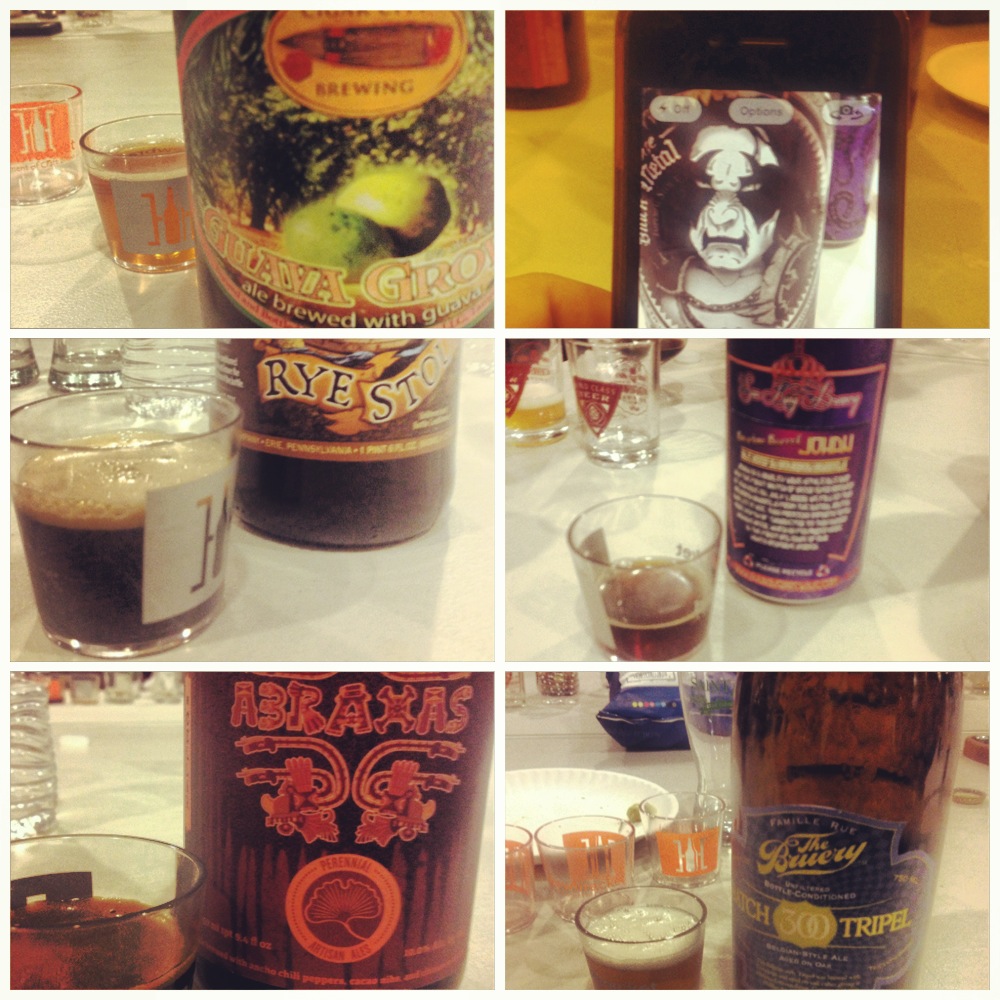
BREWniversity: The Bottle Share

I got invited to my first official bottle share. Now the Barons and I have often shared bottles with each other, but the closest thing we've ever done to a true bottle share was our Vertical Epic party. So that begs the question, what is a bottle share?

We all learned that sharing is caring in preschool, but this is a little bit more specific than that. A bottle share is when you get a few people together and everyone brings bottle of beer that they want to drink and you pass them around so everyone gets a taste. Normally it's something that's hard to find, so you are letting other people have the opportunity to try something they normally wouldn't be able to have. There really isn't a better opportunity to get to try this many unique beers other than a festival.

It's not necessary, but it's cool if you work up a theme to the party. Having all the Stone Vertical Epic beers gets people interested. This bottle share was for a Dark Lord vertical doing 6 years of the insanely good RIS.  Parker, a big time beer collector, trader and connoisseur, on the southside was hosting.
Since this was my first bottle share,  I was nervous about what to bring. When someone is as generous as Parker was, you want to make sure that you bring something that others will be excited about.

Here are some pro tips when trying to figure out what beers to bring:
  1. The harder it is to find the beer the more people will get excited about it
  2. Look at the age on the beer, the older it gets the harder it is to find, see rule one
  3. People get jacked up about beers from other markets, see rule one
  4. Variants are everyone's favorites! Go for something that has an awesome or crazy twist
  5. Look for anything that has been in a barrel, barrels are good!
General tips:
  1. Bring tasting glasses, or make sure they are provided because it'd be weird if we were all just swigging it straight out of the bottle.
  2. Bring bottled water to cleanse your pallet and keep you hydrated
  3. Plan for a DD, you are probably going to be ripped
  4. Have a spot to showcase your graveyard, because everyone wants pics
  5. Have fun. My favorite moment was when someone passed around the "Grand Cru" which was a bit of everything we drank for the night
I had a great time and am pumped to do another one.