Showing posts with label Real ale. Show all posts

Tuesday, November 12, 2013

BREWniversity: Cask Ale


When I said that I was going to the UK on vacation, everyone told me that all I'd be drinking was warm flat beer. True enough, most of the beer we drank was in fact warmer than beer in America and it was also less carbonated, but this is all on purpose. This is because most of the beer served in the UK is not on standard draft, but its on cask. Here in America we haven't embraced the concept of cask ale also known as real ale (check out the UBC in Carmel, IN if you want an awesome example), but in the UK it's pretty much expected.

Cask Ale is beer that's fermented in a ferkin or cask and then served out of the same container instead of a keg. These casks aren't pressurized or force-carbonated by CO2 or nitro, and they don't have CO2 to push the beer through the lines. They rely on the natural fermentation of left over yeast during secondary fermentation to provide carbonation and a gravity fed pump system to "pull" the beer out of the casks. While the brew is served, the yeast slowly starts to fall to the bottom of the cask and become inactive. This means the beer has a shelf life, so cask beer should always be fresh. Every pub that we went into for lunch or dinner had a set of pulls for cask ale, right alongside their normal tap lines.

Beer is supposed to be served between 50 and 55 degrees Fahrenheit in the UK. This is because cask beers were originally just stored underneath the bar in a cellar type basement. There was no refrigeration, so the beer just stayed as cold as the area where it was stored and the overall temperature depended a little bit on the season. Now it's become the standard for most cask conditioned ales here and in the UK.

The lack of carbonation is also intentional, but it's not really a lack of carbonation. The carbonation comes from the natural fermentation of the beer just like it does in bottle conditioned beers or home brews. This makes it a much softer carbonation, instead of the having the harsh carbon-dioxide that most American beers on tap have. It makes the beer less filling and leaves you less gassy. In the UK, beer is expected to have between 1/4 inch and 1/2 inch of head on top of the beer. This is much lower then the level we've come to expect here in the states, especially if you're looking at some of the macro lagers that we see. Big head tends to release a ton of aroma, the smaller lighter head forces the beer's flavor to shine through.


When I got back I had to ask Cameron Fila, the head brewery at the Union Brewing Company, why they chose to do cask ale, since we don't see it very often. He said

"My wife and I took a trip to the UK and I fell in love with the beer. 
I found that cask ale really was alive. The hops were more distinguishable, yet subdued by the creamy malt backbone. To me, cask ale was what craft brewing was really about, letting the brewer's hand and the premium ingredients shine through. 
I came home, and knew this was the direction I wanted to go in. In many ways, it puts a lot of pressure on us in the brew house. You can hide and mask imperfections in an overly carbonated beer chilled down to the point of freezing your taste buds off, but you really have to nail a cask ale"

It's interesting from a quality stand point. I wasn't a huge fan of a lot of the beers that we had while running around your basic pubs in London, but the ones that were good were spectacular. Cameron's comments made me realize that me being disappointed was probably because of how much harder it is to mask a mediocre beer when its served at the proper temperature and there isn't much carbonation. I have been a fan of the UBC since they opened, but after touring the UK for a while, I have a new-found respect for what they do. Making such a delicious product while adhering to a very outside of the box set of style guidelines makes what they do all that much more impressive.

On top of needing an expertly crafted beer, your bar also needs to maintain high standards with the casks themselves. Casks don't last as long as kegs do because they are living beers. They have to have CO2 lightly blanket the top (but again not forcing it into the keg) to keep it fresh as long as a possible. Because the yeast is still alive the brew will continue to evolve, so a bar tender has to be careful and make sure it always tastes great. Also, without the carbonation any grime or lack of cleaning will be more noticeable.

If you've never tried a cask beer, get out to the UBC in Carmel, because they've made maintenance of their system just as important as brewing quality beer. It's the best place in central Indiana to make sure your first experience is a good one.

Tuesday, October 22, 2013

Not for all the beer in England

If you follow me on Instagram or Untappd you may have noticed that the Little Lady and I just got back from London and Edinburgh in the UK. There was a lot of sightseeing and touristy stuff, but even with a busy vacation schedule we managed to squeeze in a beer or two.

First off, cask beer was everywhere! I mean everywhere! I'm pretty sure that gas stations had cask lines. Every single pub or eatery we went to had at least a few beers on cask right next to their normal taps. Secondly, they do not mess around when it comes to cider. There are tons of variety and they are excellent. The ciders are mostly poured over ice to make sure you drink them super cold. According to one of my bartenders, standard beer in the UK is served between 50 and 60 degrees depending on the style of beer. A lot of this comes from history and what they were forced to do. They also believe a proper pour should only have between 1/4 inch of head and 1/2inchof head. For the most part in the US we are looking for at least an inch.

The pubs were all beautiful with awesome looking old wood bars.On the other hand most of the beer in the pubs was just OK. Almost everything in your average pub was done with a very traditional mindset. Now, I'm not bashing traditional beers. Traditions are traditions because people liked them, but with the American craft beer movement we have gotten really used to some outside of the box flavors and different elements in the beer being turned up to eleven. There was almost none of this in the first few places we visited. Luckily I went out to Instagram and a buddy recommended the White Horse.

The White Horse reminded me of Twenty Tap in Broadripple only with a big time UK flavor. They had over a dozen beers on cask alone, and all of them were made by local microbreweries in the area. Alongside the casks they had plenty of force carbonated options and bottles. They had a great selection of Founders and Ale Smith which I thought was awesome. The bar had all of the old world charm that we found throughout the UK in the pubs and ale houses, but with some really inventive and creative beers.

Favorite beers in London were:
KeTo Reporter by Birra del Borgo Porter brewed with tobacco, crazy cool brew
Rekorderlig Ciders by Abro Bryggeri
All of the Aspall Ciders
Pilsner Urquell Tankovna (Unfiltered) by Plzensky Prazdoj

When we went to Scotland either the beer improved or I'd gotten better at finding it. We found a couple bottle shops (liquor stores) that had an awesome selection, but the crème de la crème was hitting the Brew Dog Brew Pub (look for a post to follow about Brew Dog). The pubs were pretty much the same old thing that we had seen in London. Some solid cask ales, but most of them were basic Bitters and really mild IPAs. The hops were very UK and the malts were very strong. We were told at one bar that beers from Scottland have less hops than other beers in the UK because the plant doesn't grow in their climate and the Scottish people have never liked giving England their money. Based on what we drank this held pretty true, as long as you don't count in Brew Dog.

Favorite beers in Scotland were:
Fyne and Wild Cool as a Cucumber by Fyne Ales
Paradox Isle of Arran by Brew Dog
Abstrakt AB:14 by Brew Dog
Good Times by Williams Brothers Brewing Co.

All in I was not really that impressed with the craft beer scene in London. Don't get me wrong, there are good beers there to be found. Here in Indy if you go to a restaurant and pay more than 20 bucks for an entrée you are probably going to get at least a few different local beers. In London, not so much. We went to different a lot of nice places and a lot of dives and when you were looking through the beer selection you found a lot of the same stuff. If not the exact same brewery and beer name, the same styles. The UK's love of tradition makes so much of their stuff taste pretty similar. Now when we did find a good craft beer bar, the beer was amazing. I would put it up against most breweries here in the states without question, and it was on cask which was a fun plus for me. I think we're starting to get some really good mainstream traction with our scene here in Indy, and it seemed like London and Edinburgh are just a little bit behind in the mainstream areas. That being said, the casks were awesome and the cider was amazing. Makes me want to start looking for more craft cider around home.

Cheers!

Monday, February 11, 2013

Why Not?

I have been so happy with the Union Brewing Company moving in down the street. Having something so close to home where they really care about quality is excellent. Their Why Not? is a great example of why I've totally fallen for their stuff. It's an American Pale Ale with 6% abv and 34 IBUs, which is way lower than I expect from an APA, but works out great for someone who isn't a huge hop head. Just goes to show that an APA, IPA, and AIPA are all totally different things and you shouldn't judge a beer by it's style.

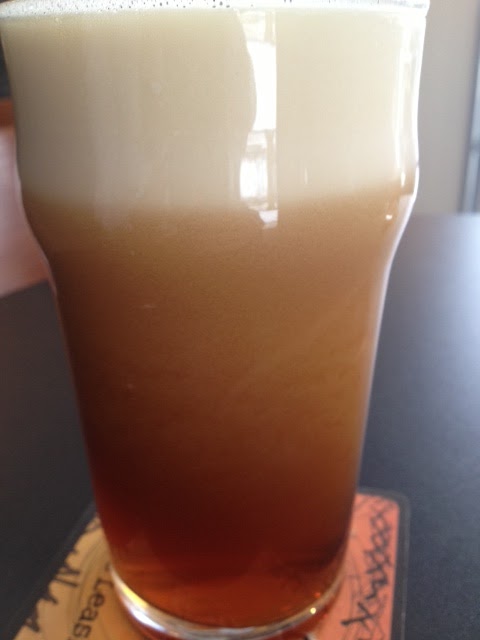
This beer came off the beer engine a mild orangish color. There was a wonderful cloud of head floating on the top of the beer. I love watching the cloudy suds slowly form when you are drinking off the cask. The lacing goes on forever when the beer comes off the cask. It had a sweet bready smell with a hint of citrus.

On the first cool taste, it is sweet and bready. There's a tangy hop vibe but nothing crazy bitter or with an unpleasant astringency. It was a big hit of caramel flavor mixed in with some tropical citrus fruits. The mix of flavors goes so well together and keeps it balanced. The beer itself has a light, light mouth feel. I have totally fallen in love with the smooth carbonation of the cask ale. All of this combines to make it a sweet, delicious easy drinking brew. There is a great balance of malt and hops. It is a sweet and tasty apa that I could totally drink every day of the week.

I give it a 4


Monday, January 7, 2013

The Scene: Union Brewing Company

I think just about everyone on the North side of Indy has been looking for a brewery to open up close by. As it is you have to go up to Barley Island or down to Bier. Neither of which are long hauls, but wouldn't it be nice to have something in the middle of Carmel.

Prayers = Answered

Union Brewing Company (UBC) opened its doors right before the holidays in 2012. I had the pleasure of checking them out on day six. They have a solid line up of guest taps and their current house beer, the Picadily Pale Ale, is very good. They are part of the "real ale" family of breweries. These breweries are putting together cask conditioned ales for us that are naturally carbonated not force carbonated with CO2. Their cask conditioned ales are also, not filtered or pasteurized. This means that they have living yeast in the beer that is being kept alive to naturally ferment the beer and continue to condition it as the beer sits in the cask. This leads to less carbonation and a great unique flavor that will develop as it sits. This is similar in concept to letting a bottle conditioned beer age to mellow the flavor.

At UBC, like most great places serving cask conditioned ales, the beer is poured off of their beer engine. This is a machine that pulls the beer out without forcing it through tubes by way of CO2. It has been used for centuries across the pond, but is making a real splash in the craft beer world over here. Instead of using your CO2 pumps, it uses a system of hydraulic pumps that pull the beer from wherever it is being stored (it used to always be stored below the bar or pub to manage temperature). It gives a beautiful looking beer with head and consistency that resembles something off a nitro tap. The cloudiness went away after about a minute of sitting in front of me. The beer ended up clear and golden yellow.


UBC is not doing growler fills right now, as they are still getting their reserves of beer going. They are adding another beer (Irish Dry Stout) next week. Expect a full review and follow up to this article in a couple of months. For now, go check them out. I found their place to be great, their beer to be tasty and their location to be perfect.